
Post Menu and Details.
- What "No Caller ID" actually means on your phone
- The steps that actually work, in order
- Why the apps and "reverse lookup" sites cannot help
- When the calls are harassment, not a wrong number
- Tools and settings worth knowing
- What the carriers can and cannot do
- Mistakes that cost people money and time
- When to call a professional
- No Caller ID Number FAQ
Words: 1528
Reading time: ~6 minutes
You cannot dial a number for no caller ID and reach the person hiding behind it. The caller ID information is stripped before the call reaches your phone, and no app on your handset can put it back. What actually works is a short list of practical steps: check your phone’s own call log settings, use carrier-level tools, file a report when the calls turn abusive, and know which paid “reverse lookup” services to skip.
Most people who get these calls only need one or two of those steps. The internet is full of services promising to unmask any number, and almost none of them can do it. A few practical steps do most of the work.
What “No Caller ID” actually means on your phone
When a call arrives, the network sends two pieces of information alongside it. They are the number and, sometimes, a name. A caller can ask the network to withhold that number. In many countries this is a standard feature you can switch on and off from your own handset. Doctors, banks, and government offices often use it.
That distinction matters. A no caller ID number is not automatically a scam. It might be your dentist confirming an appointment, or a delivery driver who cannot reach your gate. Treat the first silent call as noise and the fifth one as a pattern.
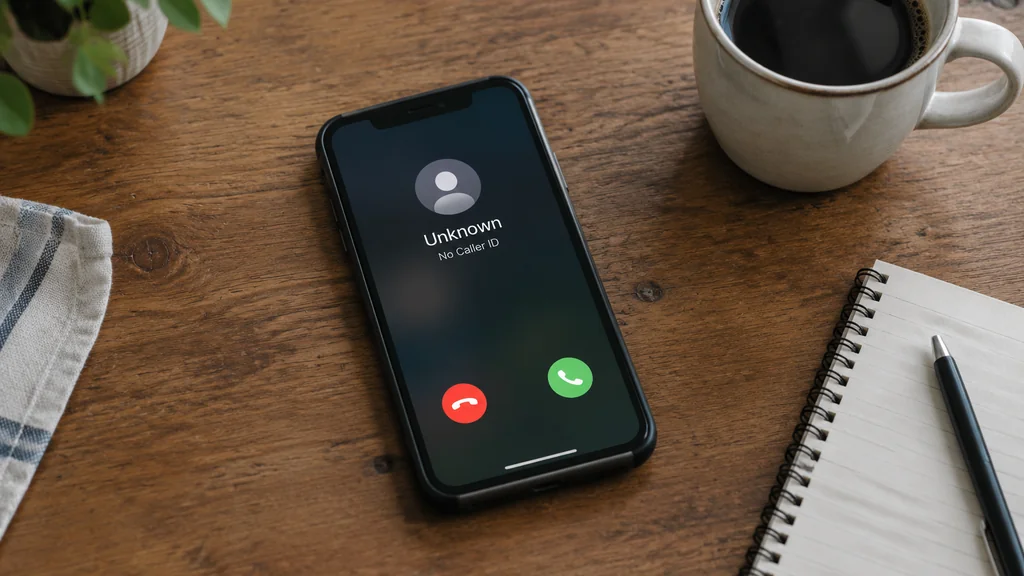
Your phone’s own call log will usually show “Unknown” or “No Caller ID” in place of the number, and there is no hidden field you can reveal by tapping around. The explanation of what no caller ID means covers why some calls arrive without a number.
The steps that actually work, in order
Work through these from cheapest and quickest to most involved. Most people find their answer in the first three.
- Check your phone’s call settings for a “show my caller ID” toggle and confirm it is on. This will not unmask anyone else, but it stops your own calls going out as unknown and confusing the person on the other end.
- Look at your carrier’s account portal or app. Many carriers list withheld calls in your itemised bill with a marker, and some offer a call-detail view that shows more than your handset does.
- Ask your carrier whether they offer an anonymous call rejection service. This blocks withheld numbers outright, which solves the nuisance even if it never tells you who was calling.
- Save the times and dates of every call in a notebook or a spreadsheet. A pattern of calls at the same hour on weekdays tells you far more than a single mystery ring.
- If the calls are threatening or repeated, report them to your carrier first and then to the police. Both need the log you just built.
- Only after all of that, consider a paid tracing service, and read the refund terms before you pay.
Downloading an app that claims to reveal hidden numbers is missing from that list for a reason. Those apps cannot see data the network never sent.
Why the apps and “reverse lookup” sites cannot help
A reverse lookup site works by matching a number against public directories and leaked databases. If there is no number to match, there is nothing to look up. That is why so many of these sites ask you to pay before showing a result that turns out to be blank.
Some apps take a different approach and ask you to upload your contacts so they can build a crowd-sourced directory. That is a real privacy trade, and it still does not unmask a withheld call. You hand over your address book in exchange for a feature that cannot work as advertised.
If a service promises to trace any no caller ID number for a small fee, treat it the way you would treat an email from a stranger asking for your card details. These services cannot match a withheld call to a number when no number is available to look up.
When the calls are harassment, not a wrong number
A single silent call is nothing. A series of them, especially at night or after you have asked someone to stop, is a different matter. Keep a written log with the date, the time, and what happened on each call. Note whether the caller spoke, what they said, and whether anyone else was in the room.
Then contact your carrier. Ask for their nuisance call team and ask what evidence they need. Ask your carrier what options are available for reporting repeated or threatening calls and what its process is for handling withheld numbers.
Contact local police or your carrier to find out what options are available where you live and what information they need. Keep your log of calls, including dates, times, and what happened.

The practical guide to calling on no caller ID walks through the settings on both iPhone and Android. It is a useful mirror image of this problem.
Tools and settings worth knowing
Your handset has more control than most people realise. On iPhone, the Silence Unknown Callers setting sends calls from numbers not in your contacts straight to voicemail. On Android, the equivalent varies by manufacturer, but it usually lives under the phone app’s settings as “block unknown callers” or similar.
A good antivirus suite on your phone will not trace a caller, but it will catch the phishing texts and malicious links that often follow a wave of nuisance calls. A review of Kaspersky’s home antivirus is a reasonable starting point if you are shopping for one, though the built-in protections on a modern iPhone or Android handset cover most of what you need.
What the carriers can and cannot do
Contact your carrier to ask what information and services it can provide for withheld calls. The options and process may vary.
What they can do is block it. Ask for anonymous call rejection, and the network will refuse the call before it reaches you. The caller hears a message saying their number is withheld and the call cannot be completed. Most people who hide their number for legitimate reasons will simply call back with it showing.
Check your plan and the details of any add-on you are offered.
Mistakes that cost people money and time
The first mistake is paying for a tracing service before trying the free options. The second is confronting a suspected caller. If you think you know who is behind the calls, do not ring them and accuse them. You will lose the element of surprise and gain nothing.
The third mistake is assuming the calls are coming from a person at all. Many are automated diallers testing whether your number is live. Answering may signal that a number is active, but the cause of repeat calls can vary. Let them ring out.
The fourth is ignoring the pattern. A single call at a random hour is noise. The same call every Tuesday at 10 a.m. is a system, and systems have owners you can complain to.
When to call a professional
Call the police when the calls include threats, when they continue after a clear request to stop, or when you believe someone is targeting you. Reporting options vary by location. Contact your carrier or local police to ask what options are available for the calls you are receiving.
No Caller ID Number FAQ
Can I trace a no caller ID number myself?
No. The number is removed by the network before the call reaches your phone, so no app, setting, or website on your handset can recover it. Ask your carrier or local police what options are available where you live. You cannot pull the number out of thin air.
Do paid reverse lookup services ever work?
They work when there is a number to look up. With a withheld call there is nothing to match, so the result is blank or a guess. Read the refund policy carefully before paying, and treat any promise of a guaranteed trace as a warning sign.
Why do I keep getting calls with no caller ID?
Often it is an automated dialler checking whether your number is live, or a legitimate organisation such as a hospital or bank that withholds its number by default. If the calls follow a schedule, keep a log and report the pattern to your carrier.
Will blocking unknown callers stop the calls?
It stops them reaching you, which is usually the point. The caller may still be dialling, but your phone will not ring. On iPhone this is Silence Unknown Callers, and on Android it is usually called blocking unknown callers in the phone app settings.
Can the police find out who called?
What options are available depends on where you live and the circumstances. Contact local police or your carrier to ask about the process. You will need dates, times, and a clear account of what was said. A written log can help when you make an enquiry.
Thank you for reading!