
Post Menu and Details.
- What "Unknown Caller" actually means
- What "Potential Spam" actually means
- Why the two labels appear on different phones
- What to do when the screen says either one
- When you want to call back but the number is hidden
- The mistakes that cost people money
- When to get your carrier or a professional involved
- Unknown Caller vs Potential Spam FAQ
Words: 1221
Reading time: ~5 minutes
“Unknown Caller” and “Potential Spam” come from two different places. The first is a plain fact from the phone network: no name arrived with the number. The second is a guess made by your phone or carrier, based on reports and patterns. Neither label tells you who is on the line, and neither one means the call is dangerous.
What “Unknown Caller” actually means
When a call reaches your phone, it usually carries two pieces of information. These are the number and a name. Carriers may look up the caller’s name in a database. If that lookup fails, or if the caller blocked their own number, your phone has nothing to show but the number itself, or nothing at all.
“Unknown Caller” indicates that the network handed your phone a call with no name attached. A few ordinary situations produce it:
- A doctor’s office calling from a switchboard that does not send a name.
- A delivery driver on a company mobile.
- Someone calling from a hotel or office landline abroad.
- A person who deliberately hid their number using a carrier feature.
That last case is the one people worry about. For more detail on the label, see what no caller ID means and who tends to sit behind it.
What “Potential Spam” actually means
“Potential Spam” is a different animal. It is a label added by software, either on your handset or by your carrier before the call reaches you. The software looks at several signals. These include how many other people flagged that number, how many calls it makes per hour, whether it appears on known complaint lists, and whether the number is brand new.
A call may show a checkmark or a “verified” note. A spoofed call may receive a spam label, but the label does not by itself prove why it was applied.
The word “potential” signals uncertainty. A legitimate business that makes a lot of outbound calls, such as a pharmacy or a repair dispatch line, can end up flagged because many people let it ring and never saved the number.
Why the two labels appear on different phones
The same call can look different on two phones sitting side by side. On iPhone, a ‘Potential Spam’ label may be supplied by the carrier or by a supported call-identification or spam-filtering service. On Android, the phone app or carrier may display a spam warning, with the exact wording varying by device and service. A basic flip phone will show the number and nothing else.
Carrier-level labelling adds another layer. T-Mobile, Verizon and AT&T each run their own analysis and sell call-screening add-ons under different names, so your neighbour’s phone may say “Scam Likely” for the same caller. The label comes from the software and does not identify the caller.
What to do when the screen says either one
These steps apply to both labels.
- Let it ring to voicemail if you were not expecting a call.
- If a message is left, listen to it before doing anything else. A genuine clinic or courier will say who they are and what they want.
- If you do answer, say hello and then stay quiet. A recorded voice or a long pause before a human speaks is the clearest sign of an autodialler.
- Never press a key to “be removed from the list” on a call you did not expect.
- Never read back a code, a password or a card number to anyone who called you.
- If the call matters, hang up and ring the organisation back on the number printed on your statement or their website.
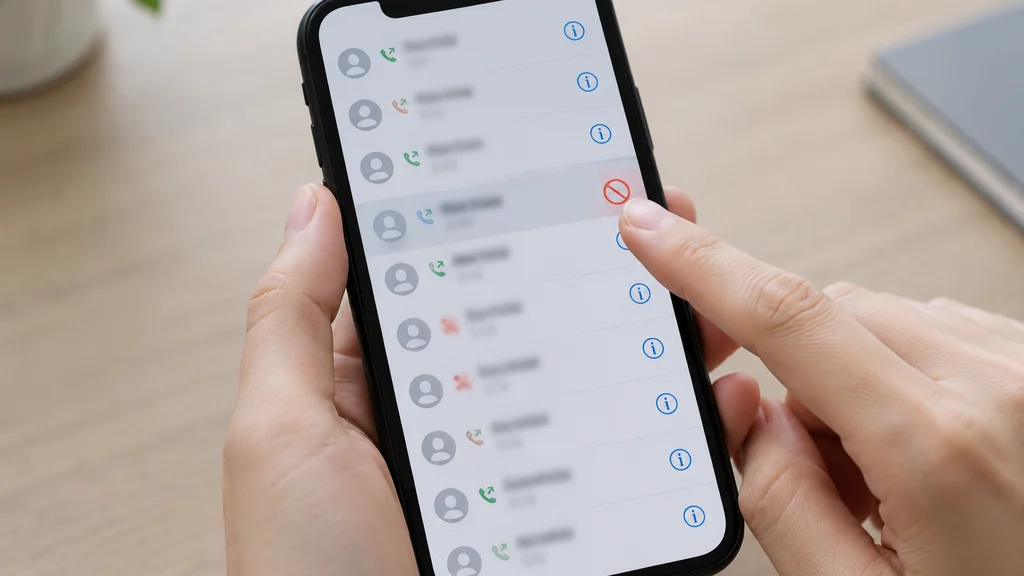
- Block the number only after you have decided it is junk. Blocking a number you actually needed is annoying to undo.
What to do when the screen says either one1Let it ring to voicemail2If a message is left3If you do answer4Never press a key5Never read back a code,6If the call matters7Block the number onlyThe steps from this section at a glance.
When you want to call back but the number is hidden
Sometimes the call was clearly legitimate and you missed it, and a hidden number leaves nothing to dial. Some carriers offer call-trace services for nuisance calls, but these may not reveal the caller’s number and availability varies. Asking your carrier directly is the reliable path.
If you want the step-by-step version, this guide on how to call on no caller ID walks through the options that actually work. And if you are tempted to go further and find out who owns the number, read tracing a no caller ID number first, because most of the paid “reverse lookup” sites sell old data and deliver nothing.

The mistakes that cost people money
Most harm from unknown calls follows the conversation, through calling back, sharing information or installing software.
- Calling back a missed call from a number you do not recognise. Some operations rely on exactly this. You ring, you get a premium-rate line, and the meter runs.
- Trusting the name on the screen. Caller ID names can be forged as easily as numbers.
- Treating a spam label as proof of fraud. Plenty of flagged calls are a dentist’s reminder. The label is a hint.
- Installing a random call-blocker from an app store. Some ask for full access to your contacts and call logs.
- Answering and saying “yes” to a question you did not fully hear.
When to get your carrier or a professional involved
If the same number keeps reaching you after blocking, or if calls arrive in bursts at odd hours, escalate. Your carrier can apply a network-level block that works before the phone even rings.
Get help sooner if you gave out a one-time code, read a card number aloud or installed something at a caller’s instruction. Ring your bank on the number on the back of your card, change the relevant passwords and check your account activity the same day.
If a phone will not stop ringing, contact your carrier or a qualified technician to troubleshoot the problem.
Unknown Caller vs Potential Spam FAQ
Is “Unknown Caller” the same as “Potential Spam”?
No. “Unknown Caller” means no name came with the number, which is a network fact. “Potential Spam” is a software guess based on reports and call patterns.
Should I answer a call labelled Potential Spam?
Usually not, unless you are expecting a delivery or an appointment reminder. Let it go to voicemail and ring back on a number you have verified yourself.
Can a scammer make my phone show “Potential Spam”?
They cannot choose the label directly, but they can influence it. Numbers associated with reports of unwanted calls or failed caller-ID authentication may be more likely to be flagged.
Why does my phone say Unknown Caller when the number is shown?
Some handsets use “Unknown Caller” for any call where the CNAM lookup failed, even when the number is visible. The name database is often stale.
Does blocking a number stop the calls for good?
It stops that number on your handset. Callers who rotate through numbers will keep getting through, which is why a carrier-level filter is more effective against persistent operations.
Is it safe to call back a missed call from an unknown number?
Only if you have a reason to think it was genuine, such as a matching voicemail or an expected delivery. Look the number up independently before returning the call.
Thank you for reading!